

OUR SPIN

Track15 Case Study Report_Audience Growth Campaigns
Track15 will be sharing a series of case study reports in the coming months. In this report we explore best practices as they pertain to audience growth campaigns.
Track15 Helped Friends of Dallas Animal Services Grow its Audience through Strategic Campaign Planning
SUMMARY
Dallas Animal Services (DAS) has been a well-known city entity for years. In fact, DAS is one of the most recognizable Dallas public services. Despite the recognition and regard for this public service, funding for DAS is beholden to the city budget and has not always received adequate funds. A group of animal lovers found the lack of budget for DAS unacceptable, and took it upon themselves to create a “Friends of” group to raise money for DAS. As a nonprofit, Friends of Dallas Animal Services (FODAS) helped raise money to fill in the funding gaps left by the city budget.
As a new nonprofit organization, the Friends of Dallas Animal Services (FODAS) needed to share their message with a wide audience. Unfortunately, they didn’t have an audience to reach. FODAS hired Track15 to create a growth campaign to both generate subscribers and share their compelling story.
Calling All Animal Lovers
The challenges for FODAS were three-fold. First, they needed to tell the story of DAS and FODAS in a compelling way. This required Track15 to conduct many interviews with DAS staff, leadership, and volunteers. Second, we needed to create channels in which to tell those stories. This led us to revamp their existing website, create a Mailchimp and social media accounts for FODAS. With the stories drafted and the channel created we needed to give them an influx of subscribers and audience members.
From Barks to Bucks
Social impressions helped FODAS to gain visibility and guide their audience to a website landing page. All told there were 28,236 impressions across all four ads for their first campaign. Emails were awareness-focused and did not have a call-to-action, so all "clicks" were an added value. Total click-through rate of all emails was 2.9% (1.27% is the industry average). Our first campaign was a warm introduction to future newsletters. The audience has grown by 46% since the campaign ended. After the initial audience growth campaign, Track15 scheduled and implemented a steady drumbeat of communication to keep their newly formed audience engaged with the mission. By their second North Texas Giving Day (2020) FODAS had increased their fundraising by 240% and increased the number of gifts by 40%.

Celebrating Four Years!
When we celebrated our 4 year anniversary in October, we felt a tremendous amount of gratitude not only for our friends and family who helped get us to this milestone, but also for all of our clients who believed that we could bring trust and excitement to their organization. When we took a step back to reflect on what we and our clients have accomplished in the last 4 years. The numbers astounded us. Here’s a snapshot:
At Track15, we can always find a reason to be grateful. We are grateful when we welcome new clients and newborns into our family. We are grateful when we reach fundraising goals, like when a client reaches their match on North Texas Giving Day, or when we attain a personal goal, like when Andrew runs in the Dallas Marathon. We are grateful for the big wins like on-boarding our 30th client and we are grateful for small wins like...making it through a Tuesday.
So when we celebrated our 4 year anniversary in October, we felt a tremendous amount of gratitude not only for our friends and family who helped get us to this milestone, but also for all of our clients who believed that we could bring trust and excitement to their organization. When we took a step back to reflect on what we and our clients have accomplished in the last 4 years. The numbers astounded us. Here’s a snapshot:

Major Donor and Moves Management
We have helped our clients identify and determine a personalized, strategic outreach for major donors and major donor prospects. Together, our clients made contact with thousands of donors, securing current and future gifts.
Data Work
We have cleaned up and organized all of our past and current clients Customer Relationship Management (CRM) tools. We have also implemented three new customized CRMs and helped our clients put best practices into place for data management.
While we take pride in reaching more nonprofits and creating a larger impact each and every day, what really motivates us is the stories we hear from our clients, the memories we’ve made, and the family and friendships we’ve grown.
We sincerely thank our past and present clients for helping us get to where we are today. You make our work enjoyable and worthwhile, and we thank you for helping us build trust and excitement with your organization. In this season of Thanksgiving we want to thank you for being a part of our growing family.
Here’s to the next 4 years!

Why Marketing Metrics Matter
In the nonprofit world, it can be difficult to tell if your marketing efforts are working. Are your emails, social media posts, and other communications engaging your audience? Is your audience growing? Are you raising money from your audience? If you put in the time to create a beautiful and robust campaign, you should also take the extra step of analyzing the campaign’s performance.
In the nonprofit world, it can be difficult to tell if your marketing efforts are working. Are your emails, social media posts, and other communications engaging your audience? Is your audience growing? Are you raising money from your audience? If you put in the time to create a beautiful and robust campaign, you should also take the extra step of analyzing the campaign’s performance.
At Track15 everything we do is rooted in data collection, especially as it pertains to marketing efforts. We believe that the metrics, when compared to a baseline, will tell an organization everything they need to know about what marketing efforts work and which do not. When collecting metrics, there are certain benchmark criteria that work.


Email Marketing Metrics
Open Rate: The percentage of audience members who opened your email
Click-Through Rate: The percentage of links embedded in your email that were clicked
Unsubscribe Rate: The percentage of audience members who unsubscribed from your email
Social Media Marketing Metrics
Organic Impressions
Organic Reach
Organic Engagement
Click-Through Rate
Follower Growth
Paid Engagement (if applicable)
Paid Click Through Rate (if applicable)
Direct Mail Marketing Metrics
Unique code/link uses
Mailed checks in response to particular campaign
How to use the metrics to improve going forward
Compare these metrics to past campaign and industry standards to measure how your organization stacks up against other nonprofits. Ideally, over time, rates will grow, your content improves, and your audience becomes more engaged.

Grant Writing and Management
Our Foundation Manager at Track15, Ashley, likes to say “grants are not a scratch-off ticket.” She believes that a successful grant program relies on the combination of an organization’s proven outcomes and a true partnership with the grantor.
Our Foundation Manager at Track15, Ashley, likes to say “grants are not a scratch-off ticket.” She believes that a successful grant program relies on the combination of an organization’s proven outcomes and a true partnership with the grantor. Below, we examine the “Track15 Approach" and other best practices when it comes to writing grants.
Grants are not a scratch-off ticket.
When an organization asks us to help them with grant writing, we usually recommend hitting the pause button.
There are over 1.5 million registered non-profit organizations in the United States, 42,000 in North Texas alone. The odds of winning a grant without any prior relationship with a grant-maker are, as we like to say, about as good as winning the lottery with a scratch-off ticket. Sure, there are rare stories about a successful, "cold" grant submissions, but we find that pairing a good application with an even better relationship is what yields success.
What makes a "good" application?
Foundations are looking for the same thing - confidence in their investment will support a quality team, program, and execution that achieves a significant outcome. This requires trust, and trust takes time to build. From our experience, here are a few points for your organization to consider while embarking on a new relationship with a potential funder:
Financial accountability: Can you report on your program expense ratio; is your 990 current; do you have an independent audit or financial review?
Impact - Is your mission in alignment with their criteria for funding; can you show evidence of program success; is the outcome an effective solution for change?
Culture - Is your organization's internal and external community inclusive and equitable?
How do you get on a grant-maker’s radar?
Once you have checked all the boxes required for the application, next, be ready to boldly share your mission. Funders are looking to build relationships with organizations that stand out as innovative and able to generate excitement for their mission. Don't be shy; look for opportunities to share your mission through:
Collaborative Partnerships - Funders want to support organizations that play well with others and innovatively share services. Collaborative work builds a united voice and will provide more opportunities to draw the attention of grant-makers.
An Elevator Pitch - Equip your staff, board of directors, and volunteers with a 3-5 minute pitch about your organization and empower them to share it with their community. If they feel confident and excited about the work your organization is doing, they will seek opportunities to share.
A Letter of Introduction - Send a Letter of Introduction to the grant-maker and ask for the opportunity to meet to discuss your organization's mission.
Community Events: Look for opportunities to feature your organization and amplify your mission by attending or speaking at a Community event.
Most importantly, don’t give up. While it may take some time to secure a relationship with a grant-maker, applying for grants is one of the most beneficial exercises for your organization. The process sheds light on gaps that may be getting in the way of your organization’s growth. Taking the time to address organizational gaps will make your grant application competitive and your organization better equipped to ask for funding from grant-makers, corporations, and individuals.
Need help with your grant program or applying for grants? Email hannah@track15.com for more information on how we can help your organization.

Kindful Blog - What To Do When One In-Person Event Accounts For All Of Your Fundraising Revenue
We are so excited to be a featured contributor on the Kindful blog forum. In this blog post, we share tips on how to steer away from an event-only fundraising strategy.
We are so excited to be a featured contributor on the Kindful blog forum. In this blog post, we share tips on how to steer away from an event-only fundraising strategy. Click here to read the article.

Meet GratiFILM
GratiFILM is helping nonprofit organizations create high-quality videos that showcase their mission. Track15 has had the pleasure of working with them on many projects and cannot recommend their services enough! In our interview with Ryan and Elizabeth, we took a deep dive into their backgrounds and explored what key components are necessary to create a successful presence through video.
Ryan and Elizabeth Schorman bring an entirely new meaning to the term “power couple.” In the past year, they took what started as a hobby and launched an entirely new career. GratiFILM is helping nonprofit organizations create high-quality videos that showcase their mission. Track15 has had the pleasure of working with them on many projects and cannot recommend their services enough! In our interview with Ryan and Elizabeth, we took a deep dive into their backgrounds and explored what key components are necessary to create a successful presence through video.

Track15: You all have such an interesting story and background. What has your journey been up to this point in your career?
Elizabeth: Ryan studied film and marketing at the University of North Texas and his passion for video started by filming skateboarding when he was a teen. After college, he worked for several advertising agencies doing video and commercials. He grew tired of making “the best ‘bad’ car commercials” and began working part-time at our church, South Main Baptist Church in Houston, doing video work. I studied finance at Texas A&M University and worked as an oil & gas investment banker from 2007-2016.

In 2011, Ryan had an idea to make accessories for high-end, cinema cameras and we started the company, Wooden Camera, on our dining room table. Ryan learned to design the products in CAD while I managed the business side. Eventually, we moved to Dallas and grew the Wooden Camera team to 40 people, including opening a retail store in LA.
Ryan: In 2016, we sold Wooden Camera but continued to run it. Then, in 2020, we volunteered to help with a few video projects for nonprofits through our relationship with Track15 and friends in the Dallas, Oak Cliff neighborhood. It became clear that it was time to move on from Wooden Camera and being
able to use our skills to help nonprofits was a very fulfilling way to transition from running a for-profit business.
Elizabeth: GratiFILM, a 501c3 itself, was a way for us to create high-quality video content at low or no cost and help other nonprofits tell their stories. We are fortunate to have different but complementary skills and to still be able to work well together after 11 years of marriage. In GratiFILM, I am the producer (and grip/teleprompter person) while Ryan writes, directs, and edits.
Track15: Tell me about the specific problem that GratiFILM helps nonprofit organizations solve.
Elizabeth: During the pandemic, nonprofits needed a way to tell their stories to volunteers, clients, and especially donors. Without the ability to hold in-person events, demand for video content was very high and if you can tell a story in a high-quality and interesting way, organizations are more successful in generating awareness and raising donations. We are excited to partner with a variety of organizations and tell their stories.
Track15: Can you share a story about a specific client, how they used your service, and what the outcome was?
Ryan: A friend connected us with The Human Rights Initiative of North Texas (HRI) who was looking to create a PSA to inform people without legal status of their healthcare rights. We collaborated with the HRI team, a volunteer animator, and several actresses in the Dallas area who narrated the video in four different languages. It was such a privilege to work with each person, learn about HRI, and contribute to a worthwhile cause.The video was a learning experience for us, filming and editing in English, Spanish, French, and Arabic, as well as working with an animator. The final product turned out so great and we hope it is helpful to the HRI clients.
Track15: What do you think are the essential components of a fundraising video?
Elizabeth: Highlighting what the organization fundamentally does is the most important part, but doing it in an interesting way with a mix of a moving interview and footage of their operations and clients. Also, during COVID-19, it is important to communicate how the organization has pivoted and still provides services to its clients so that donors continue to support them. Finally, there should always be a call to action, whether that be fundraising, volunteering, or donating in-kind items.
Track15: How do you make decisions about what content to keep and what to edit out when creating the final version of a fundraising video?
Ryan: We are firm believers that videos need to hold the watcher’ attention, compared to an in-person event, where the audience is “stuck”. With virtual events, the audience can choose to multitask, skip through the video, or stop watching altogether. We start by editing down the initial script to cut out excess words and keep the segments short and fast paced. Being able to pre-record a virtual event lends itself to a higher quality and faster paced video where you can choose the best take and edit out any excess time.

Track15: What do you think are the essential components of a virtual event in which you are pre-recording or live streaming video?
Ryan: After a few live streams, we’ve settled on pre-recording as the way to go. It’s much easier to produce a polished video with a smaller crew, which is essential during COVID-19. We can also make sure that there are no mistakes and no wasted time which is key to keep the audience engaged. A good formula for any video, pre-recorded or live, is an engaging emcee, a few minutes showing what the organization does, pre-COVID and now, an interview with a committed donor or volunteer, and a closing call to action.
Track15: What is most surprising to you about working with nonprofits?
Elizabeth: It’s been surprising to see the sheer number of nonprofits, each with their own specific missions, dedicated staff, board of directors, and volunteers. We’ve enjoyed learning about each organization and working with a variety of people for the betterment of our community as a whole.
Track15: Why are high-quality videos such an important part of a nonprofits fundraising toolkit?
Elizabeth: A high-quality video gives the nonprofit credibility and, therefore, improves their ability to raise awareness and fundraise successfully.
Track15: What do you think other people should know about GratiFILM?
Elizabeth: We are always looking for volunteers in the film industry to help write, film, or edit. Volunteers can sign up at www.GratiFILM.org

Track15 Event Management Guide
Lately, on client calls, we have been asked to “read the tea leaves” as it pertains to event planning for 2021. While we are not fortune tellers or public health officials, we have made it our priority to gather as much information as possible on the future of events to help our clients make safe and informed decisions.

Lately, Track15 has been asked to “read the tea leaves” as it pertains to event planning for 2021. While we are not fortune tellers or public health officials, we have made it our priority to gather as much information as possible on the future of events to help our clients make safe and informed decisions.
Until we hear from the Centers for Disease Control (CDC) (or another highly reputable public health organization) that herd immunity has been reached, the safest option is to keep all events virtual. The last thing your organization needs is to host a “superspreader” event. However, we know that many organizations are now planning their events for the summer, fall, and winter. We’ve created a forecast on what we believe could be potential options for your organization in the coming year.
February - May:
Format: Virtual/Drive-thru
Why: There is no indication that enough people will be vaccinated during this time to make an in-person gathering of any size safe. Drive-thru events in which attendees remain in their vehicles are considered safe.
June - August:
Format: Outdoor/Hybrid
Why: Socially-distanced, outdoor options should be safe if people keep their distance and mask up when they come within 6 feet of each other. Offering a virtual component is a good way to include folks who are still uncomfortable meeting in person. The size of the outdoor venue will dictate how many people can attend.
August - January:
Format: Indoor/Hybrid
Why: Current vaccination projects show that herd immunity could be reached. However, many people will still feel uncomfortable meeting inside. Keep the guest list small and offer a way for guests to join virtually.
As we all know, a lot can change in the next month or two (or even the next week or two!). These changes can speed up or slow down this timeline, so the best thing your organization can do at this point is stay flexible and have a plan A, B, and C in place. Venue and format should not keep you from asking for sponsorships when you normally would. Sponsors do not need to have all the event information available at the time of the ask.
To help you with those backup plans, we have created the ultimate event planning guide. This resource contains our best practices for event planning; whether they be virtual, in-person, or anything in between. We hope that this guide is helpful to you in planning your next event. If you need a little more help we are offering event planning workshops that will take you through the planning process step by step.
For more information on the workshops, email: hannah@track15.com.
Track15 Event Management Guide

Trust and Excitement - 2020 Year in Review
Our words for 2021 are on-brand: trust and excitement. With these motives propelling us forward, there is nothing we cannot accomplish.

Unprecedented, unpredictable, uncertain: these words quickly became everyday vernacular in 2020. While we do not seek to diminish the hardships faced this year, we are proud to say that through perseverance, determination, teamwork, and many virtual happy hours, we were able to grow as a company and provide tremendous services to the nonprofit community in a pivotal time. We are humbled to have made the following impact:
Over 3 million dollars raised by our clients;
40:1 average ROI on End of Year campaigns
Planned and executed one in-person event and 4 virtual/socially distanced gatherings raising nearly $900,000.00;
Planned and executed 20 digital campaigns;
In addition to the major strides made in fundraising we also:
Welcomed The Concilio, Bishop Dunne Catholic School, Southwest Transplant Alliance, Ntarupt and the International Student Foundation to our Track15 family;
Became a Better Together technical assistance provider;
Became regular contributors to the OneCause Blog;
Managing Partner, Andrew Snow was invited by Wax Space to speak on the state of nonprofits during the height of the pandemic;
Formed formal partnerships with: Gratifilm, Qualigraphics, and Minuteman Press
We welcomed Jessica Gray to our team as the project manager and point person for many of our clients. She also oversees our internal operations and ensures that we always stay on track. Laila Rothermel joined our team as a data entry and CRM specialist. She will be working closely with Joel to help our clients pull reports, input data, and build CRM’s. Ashley Shultz also joined our team as our grant writing and foundation relationships expert. Ari Lundeen joined our family in April. While we have a strict policy against hiring newborns, he will join the occasional Zoom call to increase our cuteness factor.
The hardships of last year are still real today. The reality is that we are not yet out of the woods. Nonprofits will have to work harder than ever before to meet the needs of those they serve. We welcome the challenge. According to the Dallas Morning News,
““The benefits of reducing such problems are enormous. We estimate that every $1 contributed to combat hunger yields $33 in benefits to the economy. Government investments in food programs, mental health services and indigent health care bring dynamic annual rates of return to taxpayers of between 40% and 111% and much more in contributions to business activity.” ”
Our words for 2021 are on-brand: trust and excitement. With these motives propelling us forward, there is nothing we cannot accomplish.
Best wishes for a happy and healthy 2021!
Track15

December is crunch time for many nonprofits. Our clients are in the midst of mailing their End of Year appeals, sending emails to their constituents, posting accomplishments of 2020 to various social media channels, and compiling their annual reports. We’ve generated a list of best practices to help make this season more jolly and less overwhelming!
Options, options, options for giving! Donors have different preferences on how they want to give. When you provide different giving options (i.e. cash, credit, check, link in an email, link in social post, etc.) you do your donor and organization a service.
Beware of the “donor fatigue” fallacy. There are few circumstances when donor fatigue is an issue, and the end of year appeal is not one of them. If you have maintained a steady cadence of communication throughout the year, donors expect communication with an ask from you in the month of December! By assuming that donors are fatigued, you actually undermine their desire to hear from an organization that they love and their capacity to make a difference.
Keep it bright and cheery! While you do not want to understate the struggle of the people you serve or gloss over the hardships of this year, you also don’t want to lead with doom and gloom. Letters, emails, and social posts should always carry a tone of accomplishment and positivity. Think of your appeal like a sandwich: your accomplishments as the top bread, needs and problems to solve as the middle stuffings, and gratitude with an ask as the bottom bread.
Stay organized. It’s time to make sure that your emails and social posts are scheduled. Letters take even more thought and time. Our best practice is to ensure letters are in your audience’s mailboxes by mid-December! We begin creating our letters by the first of November.
With these simple but impactful steps to executing an end of year fundraising campaign, your nonprofit will be equipped to receive your donors’ generosity this holiday season!
Wishing you all health, happiness, and prosperity in 2021!
Track15

‘Tis the season for End of Year fundraising
December is crunch time for many nonprofits. Our clients are in the midst of mailing their End of Year appeals, sending emails to their constituents, posting accomplishments of 2020 to various social media channels, and compiling their annual reports. We’ve generated a list of best practices to help make this season more jolly and less overwhelming!
‘Tis the season for End of Year fundraising–a la la la la, la la la la!
December is crunch time for many nonprofits. Our clients are in the midst of mailing their End of Year appeals, sending emails to their constituents, posting accomplishments of 2020 to various social media channels, and compiling their annual reports. We’ve generated a list of best practices to help make this season more jolly and less overwhelming!
Options, options, options for giving! Donors have different preferences on how they want to give. When you provide different giving options (i.e. cash, credit, check, link in an email, link in social post, etc.) you do your donor and organization a service.
Beware of the “donor fatigue” fallacy. There are few circumstances when donor fatigue is an issue, and the end of year appeal is not one of them. If you have maintained a steady cadence of communication throughout the year, donors expect communication with an ask from you in the month of December! By assuming that donors are fatigued, you actually undermine their desire to hear from an organization that they love and their capacity to make a difference.
Keep it bright and cheery! While you do not want to understate the struggle of the people you serve or gloss over the hardships of this year, you also don’t want to lead with doom and gloom. Letters, emails, and social posts should always carry a tone of accomplishment and positivity. Think of your appeal like a sandwich: your accomplishments as the top bread, needs and problems to solve as the middle stuffings, and gratitude with an ask as the bottom bread.
Stay organized. It’s time to make sure that your emails and social posts are scheduled. Letters take even more thought and time. Our best practice is to ensure letters are in your audience’s mailboxes by mid-December! We begin creating our letters by the first of November.
With these simple but impactful steps to executing an end of year fundraising campaign, your nonprofit will be equipped to receive your donors’ generosity this holiday season!
Wishing you all health, happiness, and prosperity in 2021!
Track15

OneCause Blog - Create the Ideal Communication Cadence
We are so excited to be a featured contributor on the Onecause blog forum. You can read all about our tips and tricks for communication best practices here!
We are so excited to be a featured contributor on the OneCause blog forum. You can read all about our tips and tricks for communication best practices here!
Expressing Donor Gratitude
As we approach the season of gratitude, we want our nonprofit friends to consider: are you grateful for your donors?

As we approach the season of gratitude, we want our nonprofit friends to consider: are you grateful for your donors?
Hear us out–we know that you are grateful. After all, without your donors, your organization would not exist. However, what we observe as consultants is that sometimes showing gratitude can become a very automatic and rushed gesture.
Showing your gratitude can take on many forms. Traditional methods include a simple letter, a phone call, a meeting over coffee or lunch, or a small gift. Whatever you decide, try to implement the practice of intentionality and awareness in expressing your thanks. According to our research, implementing this practice of genuine gratitude is actually pretty easy.
Here’s how you do it:
Use your breath. Did you just get a big check from a lapsed donor? Congratulations! Take a moment to let their generosity sink in. Rather than going straight to your email to write a quick note of thanks, find a quiet spot to close your eyes and take a few deep breaths.
Identify what you’re thankful for. Maybe it’s money, maybe it’s a volunteer, maybe it’s a staff member who went above and beyond. Whatever “it” is, putting a name, face, and action to it can help ground your appreciation. These supporters believe in your organization, your mission, and you and your team! Let that sink in as you identify what it is about their gift that you’re grateful for.
Adopt an attitude of gratitude. A donor's gift is a reflection of a lot of time and work! Don’t stop at thanking your donor. Also thank your staff, your volunteers, and yourself for getting your organization to a place where a donor thought a gift was a worthwhile investment.
This practice can be implemented in all aspects of your life. In tough times, implementing a mindful gratitude practice can improve many aspects of your overall wellbeing.
We wish all of our friends a very happy and healthy Thanksgiving!
With gratitude,
The Track15 Team
Don’t Let Donor Data Scare You - Halloween 2020 Edition
We love spooky season at Track15. What we don’t love is seeing our nonprofit friends struggle with donor data - it is the backbone of all successful development strategies and needs to be well executed. We are here as a resource to support you with your donor data journey!

Have you ever found yourself in any of these situations
You wrote down a donor's name and address on a piece of paper and lost it.
You sent an email or letter with a donor’s personal information on it to the wrong recipient.
You were told by a donor that they did not receive an email or letter, only to find out later that you had incorrect information.
Hey, no judgment… These gut-wrenching moments have been experienced by all of us at one point in time. The good news? There are many easy ways to prevent these common donor data mishaps.

Tip 1: Do It Right, Not Fast
As tempting as it may seem to track everything in an excel spreadsheet or worse, a notebook, investing the time and money into a safe and secure Customer Relationship Management (CRM) system could be the difference between data and donor synergy and total communication mayhem. The data you get out of your CRM is only as good as what you put into it in the first place. Be careful of importing data directly from vendors or third parties without checking it against your existing data. At Track15, we are versed in many CRM tools, including Salesforce, Blackbaud, Donorperfect, and Kindful.
Tip 2: Clean Up Your Data
We hear lamentations like these all the time from nonprofits: “Our CRM is terrible.” “Our CRM is a mess.” “We need a new CRM.” We are very sympathetic to the struggles our clients face with their CRM, but at Track15 we are dedicated to learning the ins and outs of your current system in order to make it work for you!
Why do we spend time doing this? A) Because buying and setting up a new system can be very expensive and very time consuming; and B) All CRMs can be complicated, at first! Sometimes you just need a tutorial to understand how to make it work for you. And C) Often, your CRM just needs a little cleaning up!
Regarding CRM clean-up: In older organizations especially, data may not have been entered correctly the first time. This may result in duplicates, incorrect householding, and incorrect donation history. There are many ways to clean up data, and it can usually be done without purchasing a new software.

Tip 3: Keep Your Data Up to Date
Keeping your constituent data up to date is a two-way street. You may be asking yourself questions like, “How do I know that so-and-so moved to California?” or “How do I know that this couple is no longer married?” The answer goes back to what we always say at Track15: communication is key. If you’re only in touch with your donors twice a year, once at Christmas and once for an invitation to an event, then you are likely not going to know when donors’ major life events occur. However, if they consistently receive communication from you, then they are more likely to meet you halfway and share updates to their email, home address, etc. You can also explore whether your CRM offers a form that your stakeholders can use to update their information.
We love spooky season at Track15 (as you can tell). What we don’t love is seeing our nonprofit friends struggle with donor data - it is the backbone of all successful development strategies and needs to be well executed. We are here as a resource to support you with your donor data journey! Contact info@track15.com for more information.
Happy Halloween!
Two Easy Steps for a Stress-Free Campaign
Is it just us, or does North Texas Giving Day seem like forever ago? Upon reflection, and after three years of running NTXGD campaigns, we continue to learn a thing or two! We wanted to give you two easy steps for a stress-free campaign, North Texas Giving Day or otherwise.
Is it just us, or does North Texas Giving Day seem like forever ago? Upon reflection, and after three years of running NTXGD campaigns, we continue to learn a thing or two! We wanted to give you two easy steps for a stress-free campaign, North Texas Giving Day or otherwise.
The Art of Calendar Keeping
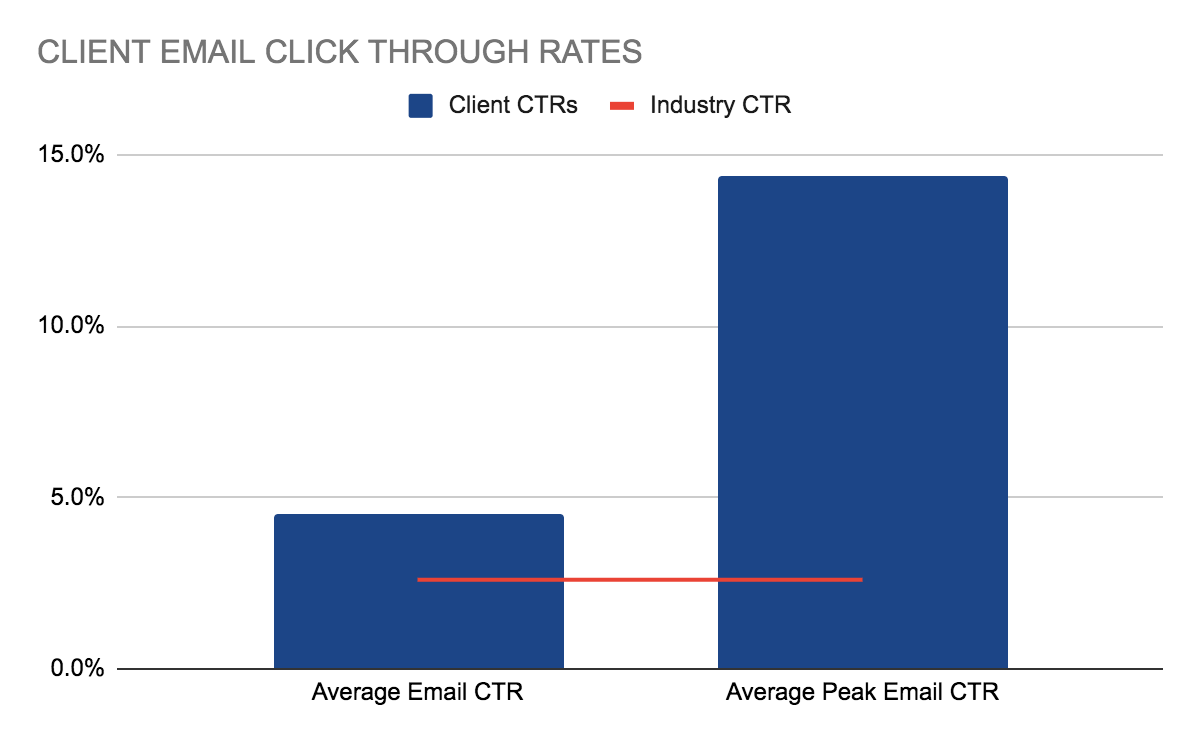
Creating an annual, steady cadence of communication - and sticking to it - lifts a lot of stress when executing a campaign. A marketing calendar helps determine when and what you want to communicate with your donors. Without a calendar, it is easy to forget or lose track of when emails should go out or social posts should post. It is also difficult to take advantage of themes that could reinforce your solicitation messages. Staying on schedule with your email and social media posts leads to higher engagement. We work hard with our clients to ensure that communication is sent out in an intentional and consistent manner, and guess what - it works! These North Texas Giving Day numbers speak for themselves:



The Science of the Giving Ladder
A Giving Ladder gives donors tangible and “bite size” examples of how their gifts support your mission. Here are some tips on how to create one:
Step 1: Set a goal - Find that sweet spot between aspirational and realistic. If you surpass your goal, donors will be impressed! On the flip side, not meeting your goal can have a detrimental effect. Consider using previous campaign performance to set goals.
Step 2: Find your own trends - Use your database to find these numbers: average gift size (even better to find the average gift size of a similar campaign), the average of the bottom 25% of gifts, and the average of the upper 25% of gifts. The difference between each level should fall between $25 - $100, depending on your average gift size. A good rule of thumb is not to exceed five options in a giving ladder; anything more can be overwhelming.
There are two other important best practices to keep in mind: when available, always have an option for your donor to write in a donation, and always construct your ladder so the highest dollar option is first.

These two steps can make even the most stressful campaign a little more manageable. While copious work and planning went into our effective North Texas Giving Day campaigns, these measures allowed us to accomplish these amazing results with our clients.
We are proud to offer support outside of North Texas Giving Day campaigns. Interested in learning more? Contact info@track15.com
COVID-19 CASE STUDIES: International Student Foundation
So many of us take “home” for granted; especially now, when it seems as if home is all we have. But what if you’re a former foster care student whose college has shut down and you don’t have a “home” to go to?
During this time, when the state of nonprofits seems particularly fragile, we want to share the incredible grit, perseverance, and ingenuity that our clients have demonstrated. In the coming weeks we will be sharing their stories of overcoming the obstacles presented by COVID-19. We hope you find these stories not only inspiring but useful as a framework in which you and your organization can build from.
So many of us take “home” for granted; especially now, when it seems as if home is all we have. But what if you’re a former foster care student whose college has shut down and you don’t have a “home” to go to?

The International Student Foundation (ISF) was founded on the principles that youth who have aged out of the foster care system deserve and need: financial assistance to help them pursue a college education, mentorship from trusted adults, and leadership development support to help them in the pursuit of a better future. When COVID-19 led to a mandatory shelter in place, many of these students struggled. Fortunately, ISF was there to help.

ISF launched an emergency COVID-19 response digital media campaign, which was focused on raising money for the student’s immediate needs during the pandemic. Accompanying the digital media campaign was their first-ever virtual event. During this event, Executive Director, Blair Ritchey interviewed ISF students. Over 300 supporters attended this event. After the event, many supporters reached out to ISF and were eager to connect with students directly and support them and their specific needs. Donors stepped up to help with students’ rent, housing needs, and much more!
ISF simultaneously launched a Peer-to-Peer fundraising campaign using individual fundraising pages. They reached nearly 70 supporters with $320 average donations per day! They also participated in the North Texas Giving Day Now campaign.
The combined effect of these efforts led to:
Nearly $13,000 raised in emergency response funds
$48.86 ROI for every dollar spent on advertising
Email click-through rate at 13% - a personal best for this growing organization
ISF is also in the process of converting their Annual Gala into a virtual event. ISF has met the challenge of these uncertain times head-on, and have found many creative ways to work around the obstacles that COVID-19 has presented.

While COVID-19 is still very much a crisis that impacts our friends, family, and community it is reassuring to witness that the services, programs, and organizations that our society relies on are still operating in a productive and effective way. We take immense pride in playing a role in helping these organizations share their stories and raise funds for their missions. We hope you’ve enjoyed these COVID-19 Case Studies; we will continue to share more content through our newsletter, blog, and social media.
COVID-19 CASE STUDIES: Friends of Dallas Animal Services
Due to the uncertain impact of COVID-19 on the city budget, FODAS took it upon themselves to push for emergency funding in order to meet DAS’ emergency needs and to create a future reserve in the event of budget cuts.
During this time, when the state of nonprofits seems particularly fragile, we want to share the incredible grit, perseverance, and ingenuity that our clients have demonstrated. In the coming weeks we will be sharing their stories of overcoming the obstacles presented by COVID-19. We hope you find these stories not only inspiring but useful as a framework in which you and your organization can build from.

This exciting new nonprofit, Friends of Dallas Animal Services (FODAS), fundraises for Dallas Animal Services (DAS), the 3rd largest municipal intake shelter in America! In the last year, they have taken tremendous pride in meeting 100% of requests for financial assistance to support DAS programs and services. Due to the uncertain impact of COVID-19 on the city budget, FODAS took it upon themselves to push for emergency funding in order to meet DAS’ emergency needs and to create a future reserve in the event of budget cuts.
FODAS created a COVID-19 Call to Action: Fund or Foster campaign.
The goal was to:
Promote a preparation fund
Promote fostering and adoption for DAS, to help clear the shelter
Raise $20,000 in emergency funding
The results?
Doubled their email list size to 14,000 subscribers (that’s twice as many people learning about FODAS and the needs of DAS)
DAS hit record adoption and fostering rates
Raised $31,554.21 in emergency funding
Perhaps most importantly, this campaign gave FODAS the opportunity to share uplifting stories of adoption and fostering during COVID-19.


During the early months of COVID-19, FODAS also:
Revamped their website in anticipation of new supporters
Participated in North Texas Giving Day Now
Launched a Virtual Pet Academy to bring animal experts directly to animal lovers

There is no “playbook” for situations like these, and often that lack of certainty can be paralyzing for organizations, not FODAS. They saw the unknowns as opportunities for improvement and development. Their courage to take chances and ability to quickly adapt to an ever changing environment led to unprecedented fundraising success.

COVID-19 CASE STUDIES: Trinity Athletics
When your mission is to engage and mentor kids through functional fitness programming, and you can no longer meet in-person to lead those workouts, what do you do? This is the exact question we had the opportunity to help Trinity Athletics answer.
During this time, when the state of nonprofits seems particularly fragile, we want to share the incredible grit, perseverance, and ingenuity that our clients have demonstrated. In the coming weeks we will tell their stories of overcoming the obstacles presented by COVID-19. We hope you find these stories not only inspiring but useful as a framework from which you and your organization can build.
When your mission is to engage and mentor kids through functional fitness programming, and you can no longer meet in-person to lead those workouts, what do you do? This is the exact question we had the opportunity to help Trinity Athletics answer.

Since March, Trinity Athletics has been met with a few challenges. First, as a relatively new nonprofit, they needed to build up their email subscription in order to spread the word about the changes they were making to the delivery of their services due to COVID-19. The Trinity Athletics team was quick to pivot how they connected with students once distance learning went into effect. They executed an assertive North Texas Giving Day Now campaign, sharing engaging stories and compelling social media content. This effort resulted in their mailing list growing to over 300 contacts with 6 segments.
Trinity Athletics captured the new delivery of their programming through a highly informative and effective video that was used during their North Texas Giving Day Now campaign. In addition to the aforementioned fundraising efforts, the video content allowed Trinity Athletics to garner additional awareness and support.
The atrocities that have occurred in the black community have led to reaction from many nonprofits. We are proud that Executive Director, Daniel Crisler took an outspoken and powerful stance in reaction to those events.


By quickly modifying the delivery of their mission, staying true to their morals, and using stories to cultivate new supporters, Trinity Athletics experienced record breaking success during this time of extreme uncertainty:
$34.19 raised for every one dollar spent on advertising
Over $3,316.00 raised during North Texas Giving Day Now
55% email open rate compared 25% industry standard


COVID-19 CASE STUDIES: Brother Bill's Helping Hand
When it became clear that offering their services in the traditional way was no longer an option due to COVID-19, they were quick to think of innovative ways to serve their neighbors in need. In a matter of days, they transformed their Grocery Store and Clinic into a drive-thru.
During this time, when the state of nonprofits seems particularly fragile, we want to share the incredible grit, perseverance, and ingenuity that our clients have demonstrated. In the coming weeks we will tell their stories of overcoming the obstacles presented by COVID-19. We hope you find these stories not only inspiring but useful as a framework from which you and your organization can build.

Brother Bill’s Helping Hand (BBHH) provides groceries, healthcare, and enrichment to neighbors living in the West Dallas and Oak Cliff communities.
When it became clear that offering their services in the traditional way was no longer an option due to COVID-19, they were quick to think of innovative ways to serve their neighbors in need. In a matter of days, they transformed their Grocery Store and Clinic into a drive-thru.
They are also now hosting virtual enrichment classes and kids programming on their Youtube channel.
As BBHH reinvented their programming, they also refined their fundraising approach. By utilizing their website, blog, social media, and email platforms for storytelling, they were able to show supporters how programming agility directly supported the community. The timing of this shift was crucial. Communications began going out in a matter of days after the quarantine mandate was issued.

Instead of canceling their annual Wild Game Cookout, BBHH reimagined what this event could be. They hosted a virtual event that brought together world-renowned chefs and home-cooks for a night of food, fun, and incredible fundraising.
BBHH was also quick to execute the North Texas Giving Day Now campaign. Due to the short notice of the event, time for planning was limited, but BBHH was not deterred by the quick turn-around. They did not hesitate to complete the tasks necessary in order to be a part of this campaign.
Lastly, BBHH ran several successful social media ad campaigns to raise awareness about their COVID-19 response.


The combined fundraising efforts resulted in the following:
Over 500 new donors since March
Nearly 400 virtual event attendees
Over $500,000 raised in emergency response funds
$3,391 raised for every dollar spent on advertising
47% email open rate compared 25% industry standard
Most notably, BBHH has developed an effective process for sharing stories of hope and progress that will continue to elevate their mission well past COVID-19.
